The product was last updated on 06/10/2025 at 04:12 pm
In the modern industrial environment, the precise control of liquid and gas flow is no longer limited to simple ON/OFF states. Advanced production systems demand the ability to modulate the flow in a flexible, smooth, and stable manner to optimize processes, ensure product quality, and save energy. Recognizing this critical need, the EM-Flow brand from Taiwan has introduced the EMPB-PSW series of modulating pneumatic butterfly valve. This is not just a mechanical device, but a comprehensive automation solution, combining the simplicity of a butterfly valve, the power of a pneumatic actuator, and the intelligence of a modern positioner. This article will provide an in-depth analysis of every aspect of the EMPB-PSW valve, from its technical specifications, structure, and operating principle to its practical applications, helping engineers and managers make the most informed investment decisions for their systems.
Overview of the EMPB-PSW modulating pneumatic butterfly valve
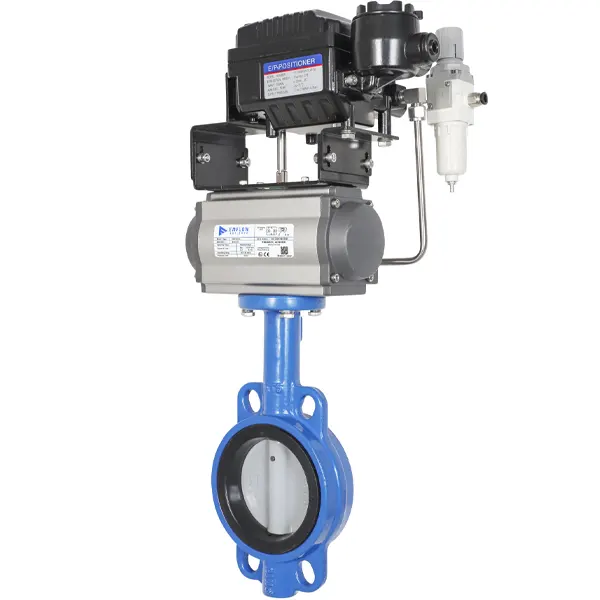
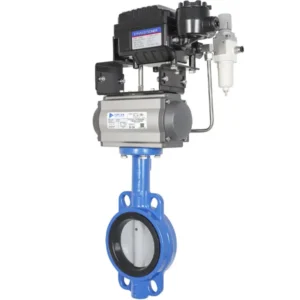
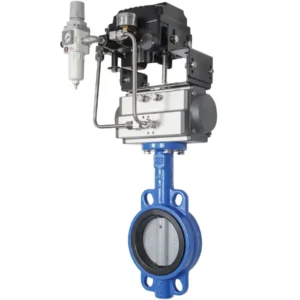
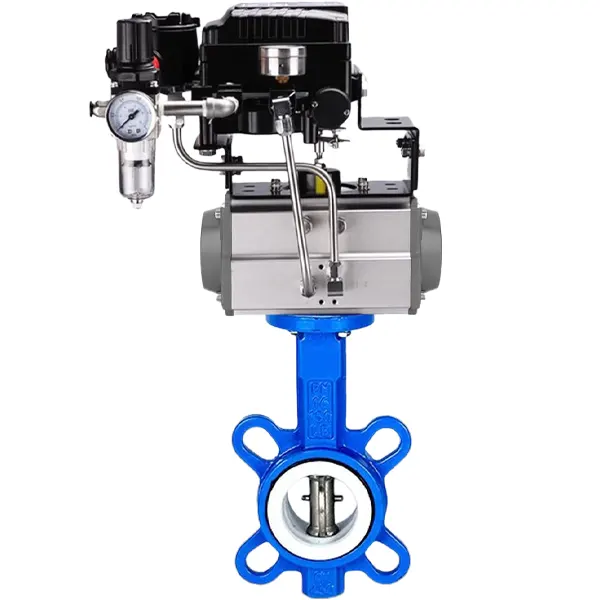
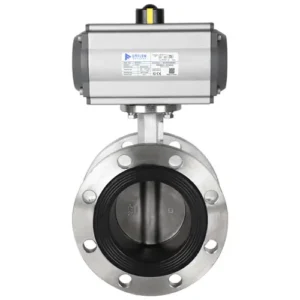
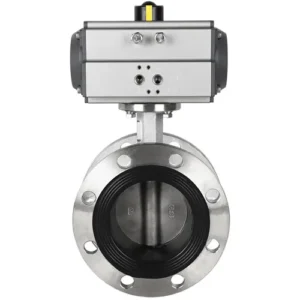
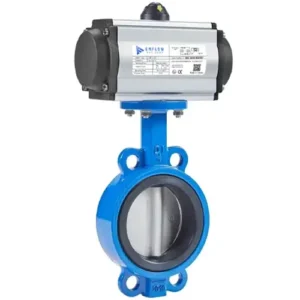
The EMPB-PSW modulating pneumatic butterfly valve is an industrial automation device specifically designed for the precise regulation of fluid flow in pipelines. The core difference between a modulating valve and a standard ON/OFF valve is its ability to adjust the disc’s opening angle to any position between 0° (fully closed) and 90° (fully open). This capability allows for continuous flow control, precisely meeting the system’s real-time requirements.
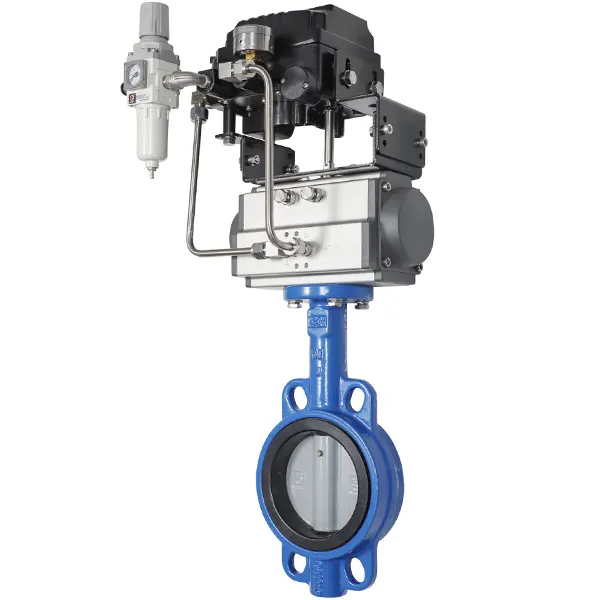
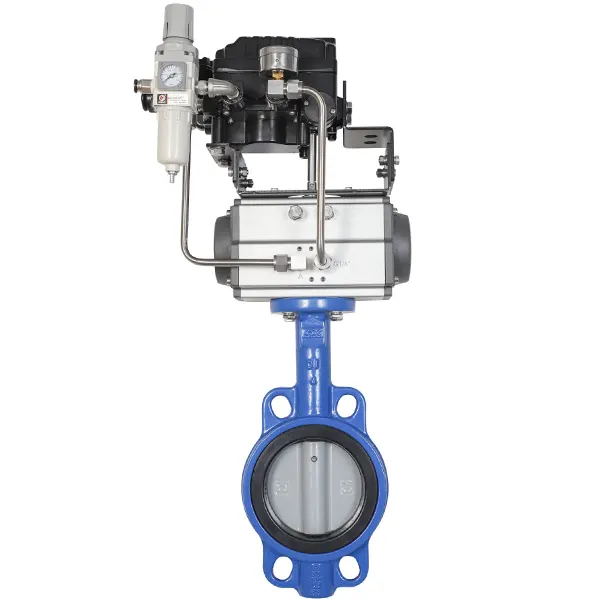
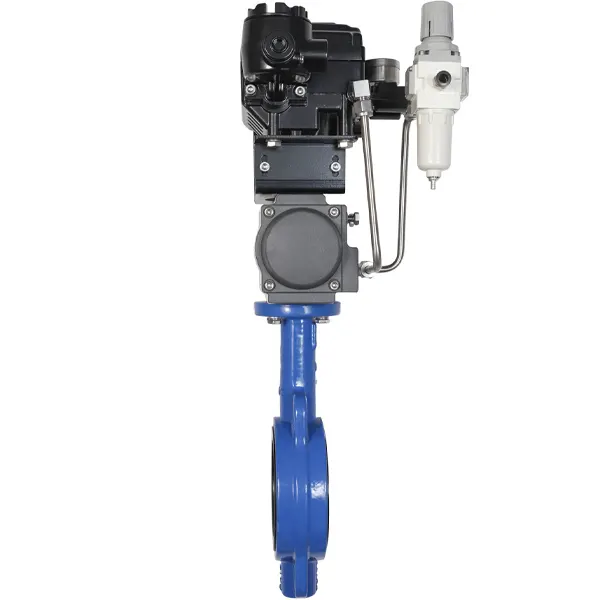
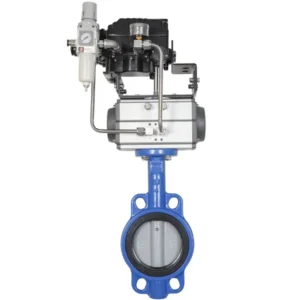
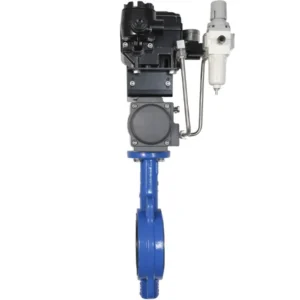
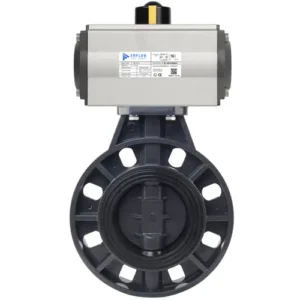
EMPB-PSW modulating pneumatic butterfly valve
Quick Product Specification Summary Table
Attribute
Details
Model
EMPB-PSW
Brand
EM-Flow
Origin
Taiwan
Size
DN50 – DN350
Operation Type
Modulating
Control Signal
4-20mA
Body Material
Stainless Steel 304, Stainless Steel 316
Seal Material
EPDM, PTFE
Connection Type
Wafer
Working Pressure
Up to 1.0 – 1.6 Mpa
Working Temperature
-10°C to 180°C
In-Depth analysis of technical specifications
Technical specifications are the language of engineers. A clear understanding of each parameter ensures the right product is selected for the right application.
Valve Body: The use of Stainless Steel 304 and 316 indicates high resistance to corrosion and rust. Stainless Steel 316, with the addition of Molybdenum, offers superior resistance to chemicals and chloride corrosion, making it ideal for the chemical, seawater treatment, and food industries.
Seat: The choice between EPDM and PTFE is crucial. EPDM is suitable for water, wastewater, and some non-oil-based chemical applications. Meanwhile, PTFE (Teflon) offers excellent chemical resistance and a wide operating temperature range, making it suitable for the most demanding environments.
Wafer-Type Connection: This connection style involves clamping the valve between two pipeline flanges. Its advantages include a compact and lightweight design, material savings, ease of installation and replacement, and compatibility with various flange standards such as ANSI, DIN, and JIS. This provides high flexibility when integrating into existing systems.
4-20mA Control Signal: This is the gold standard in the industrial automation industry. This analog signal offers good noise immunity over long distances, allows for fault diagnosis (e.g., 0mA indicates a broken wire), and can be directly powered through the loop (2-wire loop-powered), simplifying wiring.
Pressure and Temperature: A maximum working pressure range of 1.0 – 1.6 Mpa (equivalent to 10 – 16 bar) and a temperature range of -10 to 180°C indicate that the EMPB-PSW valve can meet the demands of most common industrial applications, as well as some high-requirement applications.
Standards and Certifications (Recommended Addition): To enhance reliability, the manufacturer should provide information on design standards (e.g., API 609), compatible flange standards, and important certifications such as ATEX/IECEx for explosion-proof environments (to substantiate the “explosion-proof design” claim) and FDA certification for food-grade applications.
Detailed structure and the role of each part
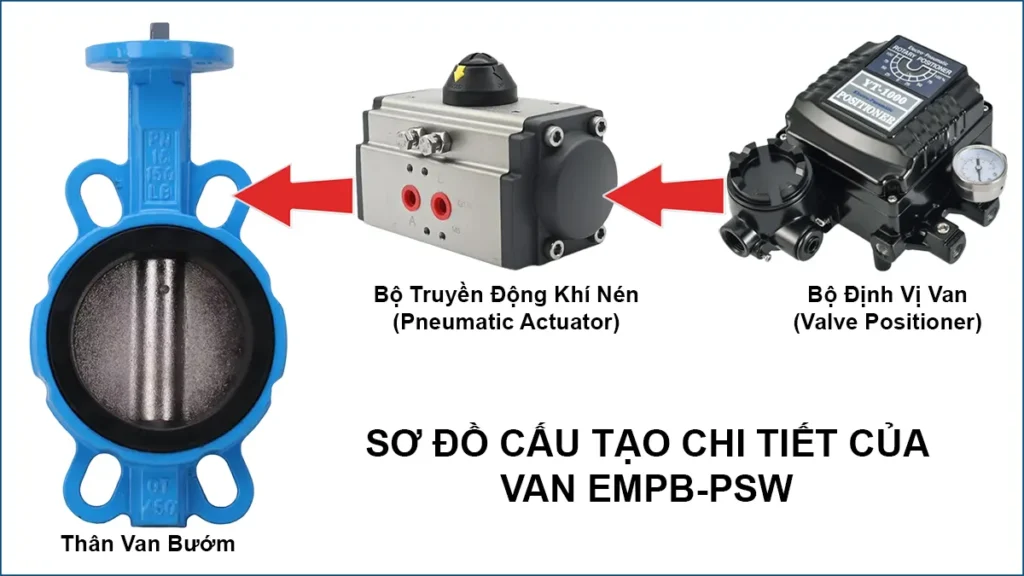
The perfection of the EMPB-PSW valve comes from the combination of three main components:
[Image: Detailed structural diagram of the EMPB-PSW valve with annotations]
Detailed structural diagram of the EMPB-PSW valve with annotations
Butterfly Valve Body: The component in direct contact with the fluid.
Body: The outer casing made of stainless steel, serving as the pressure-bearing frame for the entire valve.
Disc: A circular disc made of stainless steel that rotates 90 degrees to regulate flow. The disc design directly affects the valve’s flow characteristics.
Stem: A metal rod that transmits torque from the actuator to the disc.
Seat: Located on the inner ring of the body, made of EPDM or PTFE, ensuring a tight seal when the valve is fully closed to prevent leakage.
Pneumatic Actuator: The “muscle” of the valve, converting pneumatic energy into rotary motion to operate the valve disc.
Double Acting: Requires compressed air for both the opening and closing strokes. This type provides large and stable torque.
Single Acting: Requires compressed air for only one stroke (usually to open), with the return stroke accomplished by the force of an internal spring. This type features a “Fail-Safe” function: in case of compressed air loss, the spring automatically returns the valve to a preset safe state (normally closed or normally open).
Valve Positioner: This is the “brain” that controls the entire modulating operation of the valve.
It receives a standard 4-20mA control signal from a PLC or DCS.
It then compares this signal with the actual position of the valve stem via a feedback mechanism.
Based on the deviation, it precisely adjusts the amount of compressed air supplied to or exhausted from the actuator to move the valve disc to the exact desired position.
Operating principle of the Closed-Loop control
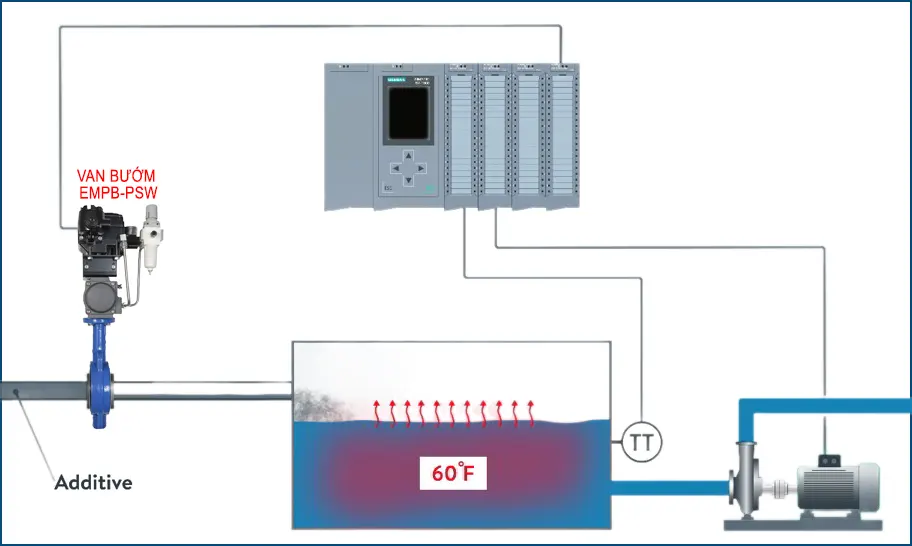
[Image/Diagram: Simulation of the closed-loop control from PLC -> Positioner -> Actuator -> Valve]
Diagram simulation of the closed-loop control from PLC
The operating principle of the EMPB-PSW valve is an automated and continuous process based on a closed-loop control system:
Receive Control Command: The central control system (PLC, DCS) sends an analog signal, for example, 12mA, to the positioner. This signal corresponds to a desired setpoint, such as a 50% opening angle.
Compare and Process: The positioner reads this signal and simultaneously receives feedback on the current position of the valve stem (e.g., currently at 30%). It detects a deviation (50% – 30% = 20%).
Modulate Compressed Air: To correct the deviation, the positioner opens an internal solenoid valve, supplying a precisely calculated amount of compressed air pressure and flow into the chamber of the pneumatic actuator.
Operate the Valve: The compressed air pressure acts on the piston, creating torque that rotates the valve stem and disc in the opening direction.
Position Feedback: As the valve stem rotates, the feedback mechanism continuously sends the actual position signal back to the positioner.
Reach Desired Position: The process of supplying compressed air continues until the actual opening angle of the valve precisely matches the required setpoint (50%). At this point, the positioner stops supplying/exhausting air and maintains a stable pressure to hold the valve in that position.
Repeat: If the signal from the PLC changes (e.g., drops to 8mA, corresponding to 25% open), the positioner will exhaust compressed air to allow the valve to partially close until it reaches the new position. This process occurs continuously, ensuring the valve always tracks the control signal with very low error.
7 Key features that create a competitive advantage for EMPB-PSW
Ultra-Precise modulating Flow Control: Thanks to the intelligent pneumatic positioner “brain,” the valve can smoothly and accurately adjust its opening angle according to the 4-20mA signal, enabling flow control with extremely low error.
Reliable and Tight Shut-Off Capability: In addition to its modulating capabilities, when it receives a fully closed signal (4mA), the valve still functions as a shut-off valve with a high degree of tightness, preventing leakage and fluid loss.
High-Quality Materials, Compatible with Diverse Environments: With a stainless steel body and the option of a PTFE seat, the valve can operate durably in various fluid environments, including highly corrosive chemicals.
Flexible and Quick Installation: The Wafer-type connection not only makes the valve compact but also simplifies installation, maintenance, and removal, saving time and fitting multiple flange standards.
Safe Design for Hazardous Environments: The product is introduced with an explosion-proof design, making it a preferred choice for areas with high explosion risks in the chemical and oil & gas industries, ensuring maximum safety for personnel and systems.
Easy Integration into Automation Systems: The valve can be easily connected to control panels, PLCs, or SCADA systems, allowing for remote control, monitoring, and data collection, contributing to the development of smart factories.
Compact, Space-Saving Design: The inherently compact structure of a butterfly valve, combined with the Wafer-style connection, significantly saves installation space, which is particularly useful for machine clusters or areas with limited space.
Practical applications in various industries
The flexible control capability of the EMPB-PSW makes it an indispensable component in many industrial processes:
Water and Wastewater Treatment Systems: Precisely regulating inlet water flow, chemical dosing flow (alum, polymer, chlorine), or controlling sludge flow.
Food and Beverage Plants: Controlling the flow of liquid ingredients such as milk, beer, soft drinks, and syrup to ensure accurate mixing ratios and consistent product quality.
Chemical and Textile Dyeing Industries: Controlling the flow of various chemicals, solvents, acids, bases, or dyes to optimize reactions and ensure product color consistency.
HVAC Systems: Adjusting the flow of hot and cold water in chillers or air in ventilation systems to control temperature accurately and save energy.
Pulp and Paper Mills: Controlling the flow of pulp and chemical additives during the production process.
Compressed Air Systems: Regulating the pressure and flow of compressed air supplied to other equipment in the factory.
Guidelines for selection, installation, and operation
To ensure the valve operates efficiently and durably, the following principles should be followed:
Valve Selection:
Identify the fluid: To select the appropriate body and seat materials.
Determine temperature and pressure: Ensure they fall within the valve’s operating range.
Calculate the flow rate (Cv/Kv): Choose the appropriate valve size so that it operates most effectively within the 20-80% opening range.
Determine safety requirements: Is a “Fail-Safe” function needed? If so, choose a single-acting actuator.
Installation:
Thoroughly clean the pipeline and flange surfaces before installation.
Ensure the valve is installed concentrically with the pipeline.
Tighten the bolts symmetrically and gradually to avoid damaging the seat.
Leave sufficient space for operating and maintaining the actuator.
Operation and Maintenance:
Supply clean, dry compressed air at the correct pressure (2-8 bar).
Regularly check for air leaks at the connections.
Periodically inspect and recalibrate the positioner to ensure accuracy.
Plan for the replacement of wearing parts such as the seat seal.
Why choose EM-Flow and the EMPB-PSW product?
Quality from Taiwan: EM-Flow is a brand from Taiwan, a region known for its high-quality industrial products and advanced technology.
Comprehensive Solution: The EMPB-PSW is not just a valve; it’s a complete control solution, cohesively designed for effective operation.
Optimal Performance-to-Cost Ratio: Compared to products from Europe or G7 countries, products from Taiwan often deliver reliable performance at a more reasonable investment cost.
Warranty, Technical Support & Spare Parts: When choosing a product, work with reputable authorized distributors to ensure a clear warranty policy, the availability of spare parts, and professional technical support when needed.
Conclusion: The EM-Flow EMPB-PSW modulating pneumatic butterfly valve has proven to be a powerful, precise, and flexible flow control solution. With its durable stainless steel construction, intelligent control via a 4-20mA positioner, and installation-optimized design, this product fully meets the stringent requirements of many industries, from water treatment and food processing to chemicals. Investing in the EMPB-PSW is not just an investment in a device, but an investment in process stability, product quality, and the efficiency of the entire automation system.
We recently upgraded our blending system with the EMPB-PSW Pneumatic modulating butterfly valve from EM-Flow, and the results have been phenomenal. The key for us was the modulating capability, which has allowed us to achieve incredibly precise flow rates for our different liquid ingredients. The 4-20mA positioner is highly responsive and maintains a stable disc position, even with slight pressure fluctuations in the line. We can now accurately control our mix ratios, which has significantly improved the consistency and quality of our final product. The valve’s build quality is robust, and the modulating actuator is very reliable. A truly high-performance product that is worth the investment.”
Be the first to review “EMPB-PSW modulating pneumatic butterfly valve” Cancel reply





Mr. Truong –
We recently upgraded our blending system with the EMPB-PSW Pneumatic modulating butterfly valve from EM-Flow, and the results have been phenomenal. The key for us was the modulating capability, which has allowed us to achieve incredibly precise flow rates for our different liquid ingredients. The 4-20mA positioner is highly responsive and maintains a stable disc position, even with slight pressure fluctuations in the line. We can now accurately control our mix ratios, which has significantly improved the consistency and quality of our final product. The valve’s build quality is robust, and the modulating actuator is very reliable. A truly high-performance product that is worth the investment.”